AI Image Tools for Social Media Posts, Memes and Product Photos
AI image tools now make it easy to create branded graphics, product shots, and memes for social media. No design background required.
On this page
- The Visual Expectations Are High and Climbing Fast
- Branded Graphics That Reflect Who You Are
- Product Photography Without the Studio Setup
- Memes and Culturally Relevant Posts That Actually Land
- A Five-Step Workflow for Consistent Social Visuals
- Getting Consistent Output From Your Prompts
- Your Visual Presence Starts With One Good Prompt
Posting a generic-looking graphic because Photoshop felt too complicated is a frustration most non-designers know well. The tools have changed. AI image generation has made it possible for anyone with an idea to produce visuals that look intentional, polished, and on-brand. Whether you are running a small shop, managing a brand account, or just trying to grow an audience, the right AI image tool can handle the creative heavy lifting.
What to Know Before You Start
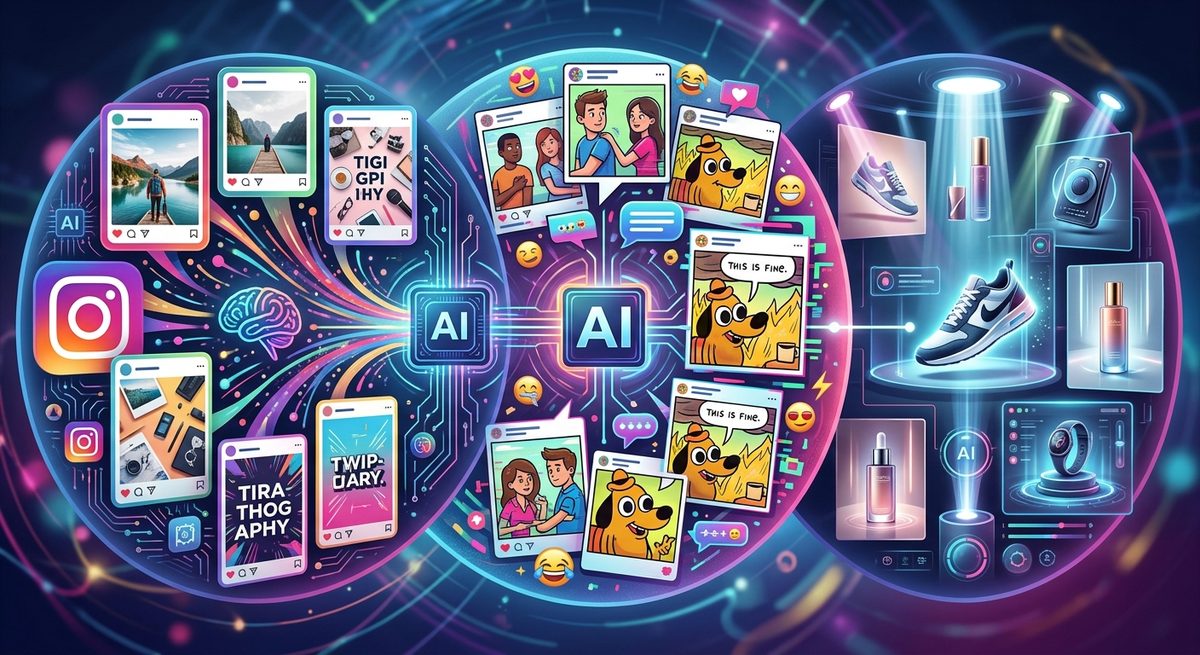
- AI image tools cover three major social media visual categories: branded graphics, product photography, and meme-style content.
- You do not need any design skills to produce professional-looking results with today's AI platforms.
- Understanding the format and purpose of each visual type helps you write better prompts and get stronger output.
The Visual Expectations Are High and Climbing Fast
Social media audiences scroll fast. A visual that looks sloppy or generic gets passed over in under a second. That is not an exaggeration. Image-heavy posts consistently outperform text-only content across nearly every major platform. According to social media adoption figures from the Pew Research Center, the vast majority of American adults use at least one social media platform on a regular basis. That means your visuals are competing against a tremendous amount of noise at any given moment.
For small business owners, content creators, and marketers without a design team, this creates real pressure. Hiring a graphic designer for every post is not realistic. Juggling multiple expensive software subscriptions is not either. AI image tools fill that gap. They bring professional output within reach of anyone who can type a sentence.
Branded Graphics That Reflect Who You Are
A branded graphic is any image that carries your visual identity. Think Instagram announcement posts, Twitter header images, promotional banners, and quote cards. These visuals do more than carry information. They train your audience to recognize you at a glance, and that recognition compounds over time.
AI image generators make it surprisingly straightforward to produce these. You describe the look you want, specify a color palette or mood, and the tool generates a starting point. From there, you adjust. The output often needs minimal editing before it is ready to post. Some platforms also let you upload a reference image, which helps maintain visual consistency across your content calendar without you having to rebuild the look from scratch each time.
The key with branded graphics is repetition. Your audience builds recognition through repeated exposure to the same visual style. AI tools help you produce variations fast without drifting away from your core aesthetic. You can generate a dozen versions of a promotional graphic in the same time it once took to build a single one inside traditional design software.
Product Photography Without the Studio Setup
For ecommerce sellers, product photography is one of the biggest ongoing production costs. Hiring a photographer, booking studio time, and editing the results adds up fast. AI image tools have changed this equation significantly.
Modern AI platforms can take a basic product image, remove the background, and place the item inside a generated scene. You can request a clean white background for a marketplace listing or a lifestyle setting that shows the product in context. The results have improved dramatically over the past two years. Many AI-generated product images are now difficult to distinguish from professional studio shots.
This is particularly valuable for sellers who launch new products frequently. Instead of scheduling a new shoot each time, they can feed the AI a clear photo and get platform-ready images back within minutes. Some tools also handle multiple format outputs in the same session, giving you a square crop for Instagram, a landscape version for a banner ad, and a portrait format for Pinterest, all from a single source image.
The workflow matters here. Keep a clean, well-lit base photo of your product. Use consistent lighting when you take it. The AI performs better when the source image is sharp. A blurry or poorly lit input produces a blurry or inconsistent output, regardless of how capable the platform is.
Memes and Culturally Relevant Posts That Actually Land
Memes are one of the most misunderstood content formats for brand accounts. Used well, they create moments of genuine connection with an audience. Used carelessly, they come across as out of touch or tone-deaf. The format matters enormously before you get anywhere near the visual creation step.
Before using an AI tool to generate a meme image, it helps to understand the structure and cultural context behind different formats. Reading a solid guide on how to make a meme covers the logic behind why certain formats spread and others fall flat. That foundational knowledge directly improves what you ask an AI to produce. If you do not understand the template you are working with, the output will miss the mark regardless of how capable the tool is.
Once you have that foundation, AI image generation handles the visual step efficiently. You can describe a specific meme format, specify a relatable scenario, and generate the base image. Text overlay is typically added afterward, either within the same platform or in a basic editor. The combination of human understanding of meme culture and AI speed in image creation gives you a practical content workflow that can keep pace with fast-moving trends.
Speed matters with memes. A format that is culturally relevant today may feel stale in three days. AI tools reduce production time enough that you can respond to trending formats while they are still fresh, which is where the real value for social media creators sits.
A Five-Step Workflow for Consistent Social Visuals
Getting reliable results from AI image tools is less about the tool itself and more about having a repeatable process. Here is a workflow that works well for non-designers creating social content across all three visual categories:
- Plan your visual mix for the week. Decide in advance which posts need a branded graphic, which need a product image, and which might benefit from a meme or culturally relevant format. Planning ahead reduces last-minute prompting, which tends to produce inconsistent results.
- Write your prompts before opening the tool. Spend five minutes describing what you want in plain language. Include details about mood, color, composition, and subject matter. A specific prompt will consistently outperform a vague one.
- Generate multiple variations every time. Most AI tools let you produce several versions from a single prompt. Always request at least three. The first output is rarely the strongest one.
- Resize and optimize for each platform. Different platforms have different optimal image dimensions. Resize your chosen output before posting. A well-composed image cropped incorrectly loses its impact entirely.
- Save your best prompts for future use. When a prompt produces great output, keep it. You can reuse it with small modifications for future content, which helps maintain visual consistency without starting from scratch every time.
Getting Consistent Output From Your Prompts
One challenge non-designers run into early is inconsistency. Two prompts that seem similar can produce very different results. This is normal with generative AI, and it is manageable once you understand a few basics.
Specificity is your strongest asset. Instead of asking for "a photo of a coffee mug," describe the mug's material, the lighting, the background setting, and the mood. "A ceramic mug on a rustic wooden table, warm morning light, shallow depth of field, clean and minimal" will produce a more consistent and useful result than a shorter, vaguer description.
Style references also help. If you know you want your images to look editorial, cinematic, or flat and graphic, include that language directly in your prompt. AI tools respond well to aesthetic descriptors because they have been trained on enormous libraries of tagged images. The more precisely you describe the visual language, the more reliably the output matches your expectations.
Do not discard near-miss outputs, either. Sometimes an image is close but not quite right. Many AI platforms let you use a generated image as a reference for the next generation, iterating toward your ideal result rather than starting the whole process over again.
Your Visual Presence Starts With One Good Prompt
The barrier to great social media visuals is lower than it has ever been. You do not need expensive software, a design background, or a production budget to post content that looks considered and professional. You need a clear idea of what you want to communicate and an AI tool capable of turning that idea into an image.
Branded graphics build recognition over time. Product images drive purchasing decisions in seconds. Memes create cultural connection with an audience that shares your perspective. Each of these visual categories serves a different purpose, and AI image tools are now capable of handling all three within the same workflow, without requiring separate platforms or specialized skills for each one.
Start with one category. Get comfortable with the prompting process for that visual type before adding the others. The tools are forgiving enough for beginners and flexible enough for creators who want to push toward more sophisticated output. Your next post is already taking shape. An AI image tool is ready to make it visible.
This is a guest contribution to the img.now Blog. For our own step-by-step guides, see Learn.